Why does the buoy that looked like an easy swim from the shore seem no closer once you are in the water?
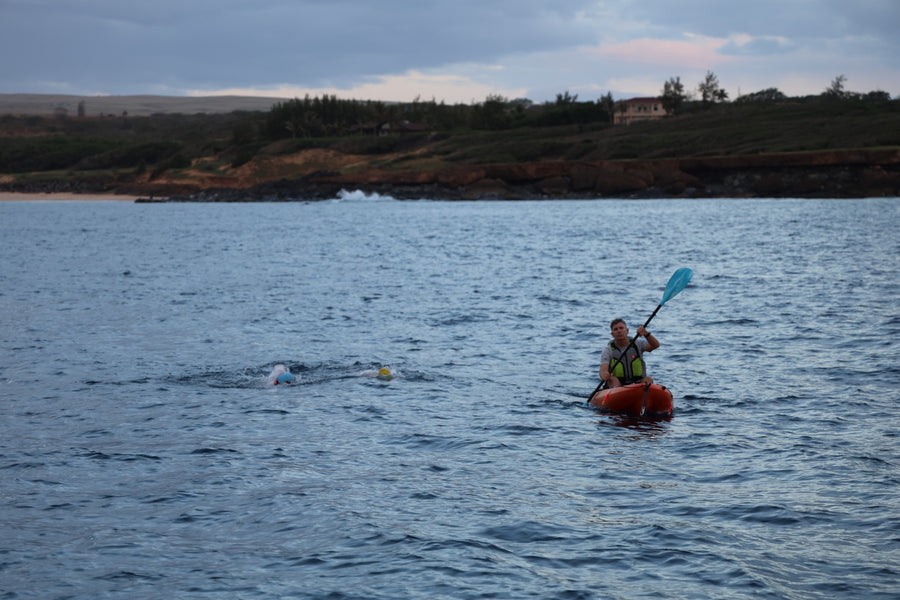
It is a familiar experience for open-water swimmers. The opposite shore is right there. The boat you are aiming for does not look far away. Then you start swimming and realise the distance is longer than you thought.
Your swimming speed is not always the problem. Sometimes your eyes are misleading you.
How do we judge distance?
In everyday life, we rely on all kinds of visual clues to estimate distance, usually without noticing.
Roadside trees, buildings and objects of familiar sizes give us a sense of scale. The way nearby objects appear larger and distant ones smaller helps us judge how far away they are.
At sea, many of those reference points disappear.
Ahead of you is a broad stretch of water, the horizon, and perhaps a small buoy in the distance. If you do not know how big that buoy actually is, judging its distance becomes much harder.
And the horizon is more than part of the view. Research into visual perception shows that an object’s position relative to the horizon can affect how we perceive its size and distance.
Does everything really look closer?
Not always. But researchers have observed a tendency to underestimate distances over open water.
In a study published in 2016, 22 participants estimated distances of 50 to 950 metres, looking from shore to a boat and from a boat towards shore.
Overall, distances were underestimated. But there were substantial differences between participants. Most tended to underestimate distances below 400 metres and overestimate longer ones.
FROM THE RESEARCH
Across the study’s overall measurements, estimated distances at sea averaged 74% of the actual distance.
So the real issue at sea is not that everything consistently looks closer. It is that our sense of distance becomes less reliable.
Then add waves
A buoy you could easily see from the shore can disappear from view as soon as you start swimming.
There is a simple reason: your eyes are now much closer to the surface. Even small waves can briefly block your view. Your head is also moving throughout the swim, making a steady reference point harder to find.
That is why open-water swimmers need to do more than spot their destination. They need to keep checking their course.
“Nearly there” is a feeling, not a reliable way to measure distance.
Remember that next time you look towards a distant buoy. Looking close does not necessarily mean it is close.
Learning to judge distance is part of learning to swim in open water.