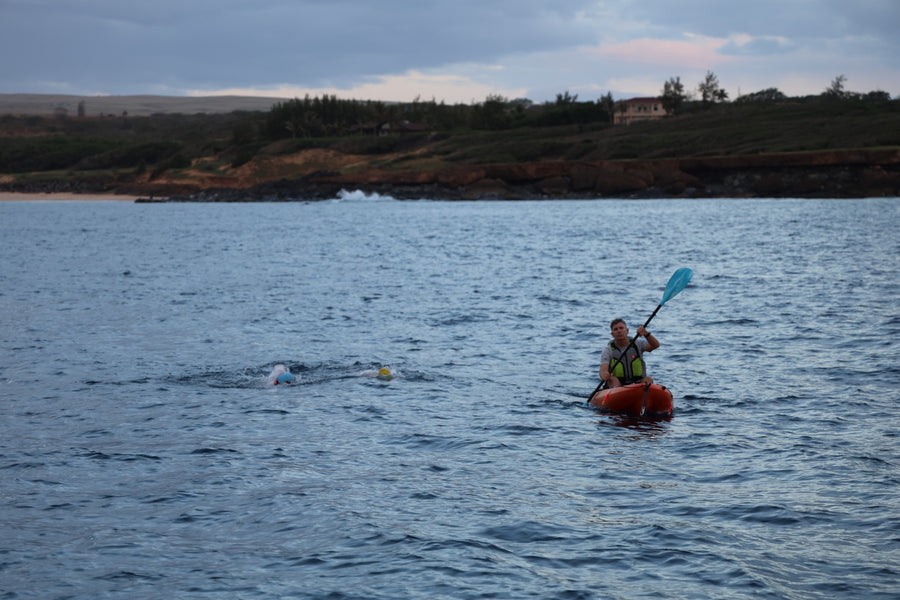
When you're swimming in the sea, you can see the boats, the shore, buoys and other swimmers around you. But how easily can they see you?
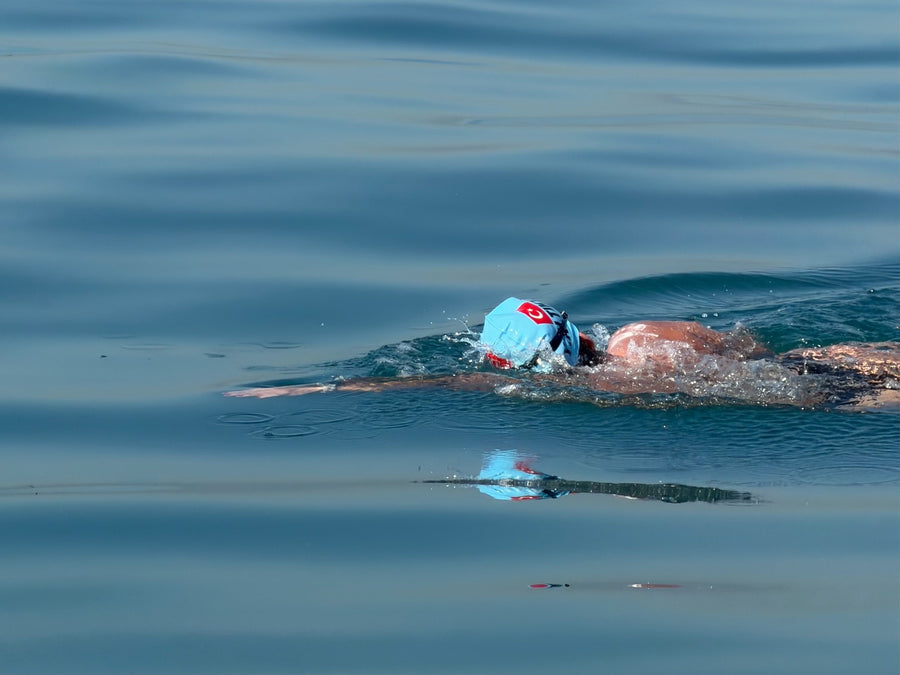
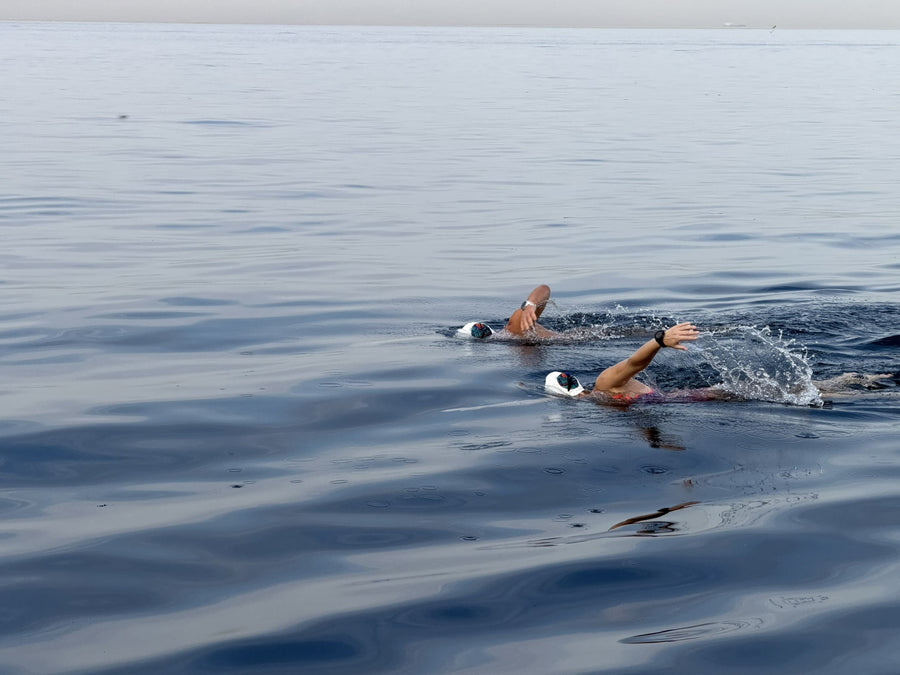
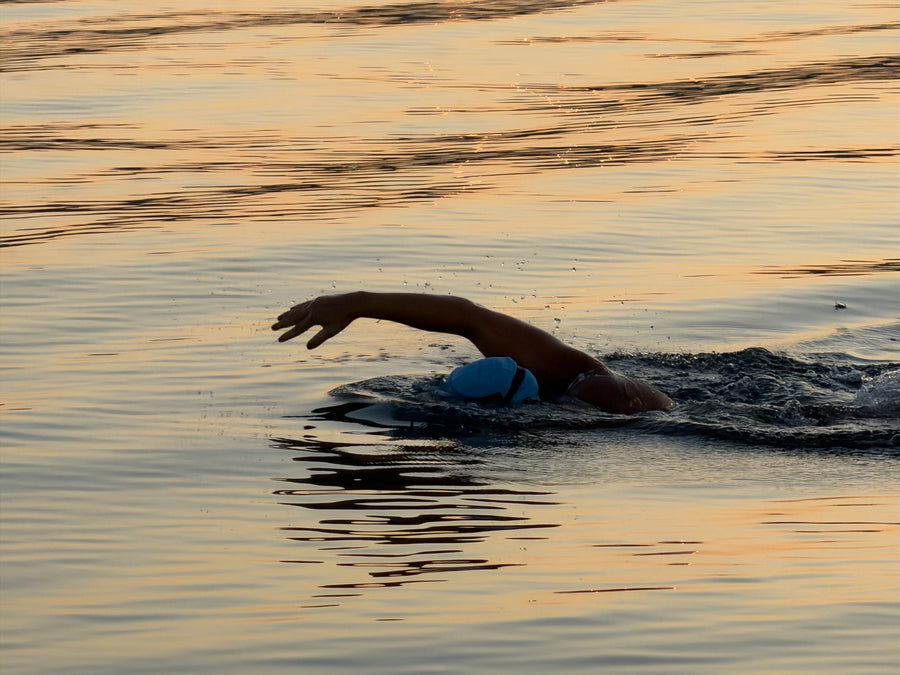
Very little of a swimmer is visible above the surface. Much of your head is underwater and your arms are constantly moving. Waves, glare and changing light can make you even harder to spot.
That's why visibility in open water is an important part of planning a safe swim, as well as a consideration when choosing your gear.
Your cap colour can make a difference
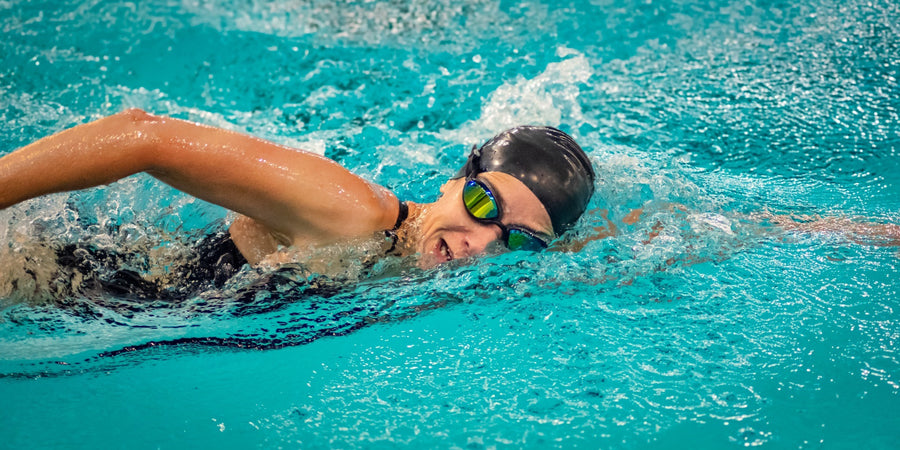
A dark swim cap can easily blend into open water, especially from a distance.
Bright colours such as orange, pink, yellow or green can help a swimmer stand out by creating contrast with their surroundings.
But no single colour is the most visible in every situation. The colour of the water, the weather, the direction of the light and the observer's position can all affect what stands out.
So when choosing a cap for open water, consider how noticeable it is where you'll be swimming, as well as whether you like the colour.
What does a tow float do?
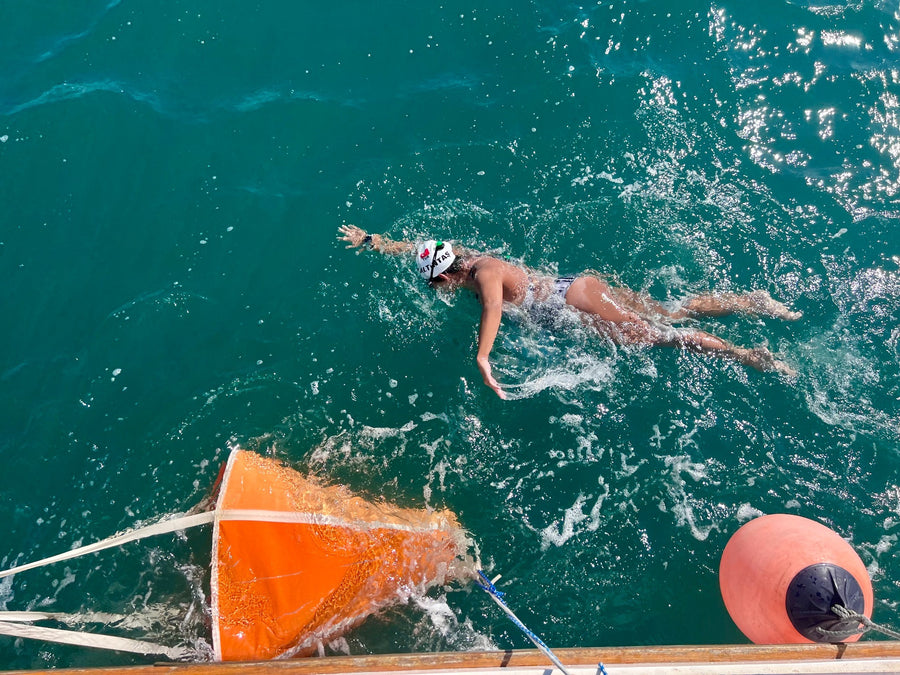
The brightly coloured tow floats used by open-water swimmers usually attach around the waist and trail behind them on the surface.
They offer a larger, usually brighter surface than your head, which can help other people spot you.
Some models also have waterproof compartments for carrying personal belongings.
There is an important distinction, though: a standard tow float is not a lifejacket or an approved lifesaving device. You cannot rely on it alone to keep you safe in the water.
The RNLI's open-water swimming guidance includes using a brightly coloured cap and tow float among the steps swimmers can take to improve their visibility.
Just because you can see a boat doesn't mean the people on board can see you.
Is being visible enough?
No. A bright cap or float doesn't make a busy boating area safe to swim in.
Boat speed, waves, the angle of the sun and visibility can leave you unnoticed even with the most eye-catching equipment.
Plan your route in advance and, wherever possible, choose designated swimming areas away from boat traffic.
Someone should know where you are, too
Whenever possible, use the buddy system: swim with someone who can keep track of you and call for help if needed, and do the same for them. Swimming together can help you notice changes in each other's condition sooner.
Before you get in, tell someone you trust on land where you'll enter the water, which direction you'll swim, roughly how far you'll go and when you expect to be back.
Agree in advance on what they should do if you're overdue. If something goes wrong, that gives them important information about where to look for you.
The RNLI's open-water safety guidance also recommends never swimming alone, sharing your plans with someone and checking conditions before you swim.
Open-water safety doesn't depend on a single piece of equipment. Your route, the weather and sea conditions, your swimming ability, the people with you and your visibility all need to be considered together.