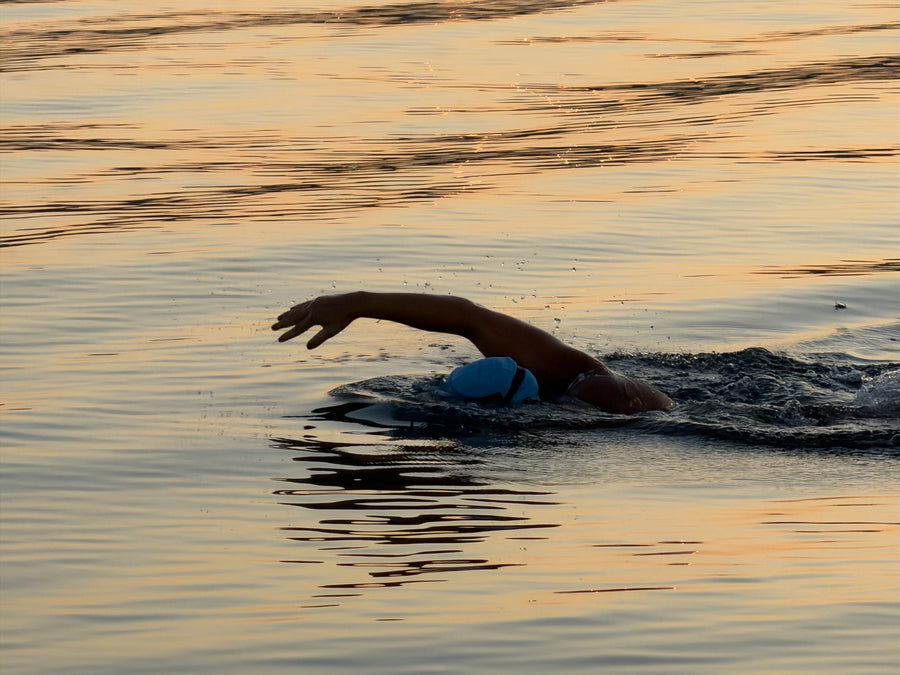
You can swim kilometre after kilometre in a straight line in the pool. Then you get into the sea, aim for a buoy and, a few minutes later, find yourself heading somewhere else entirely.
And as far as you could tell, you never changed direction.
So what happened?
The pool does the navigating for us
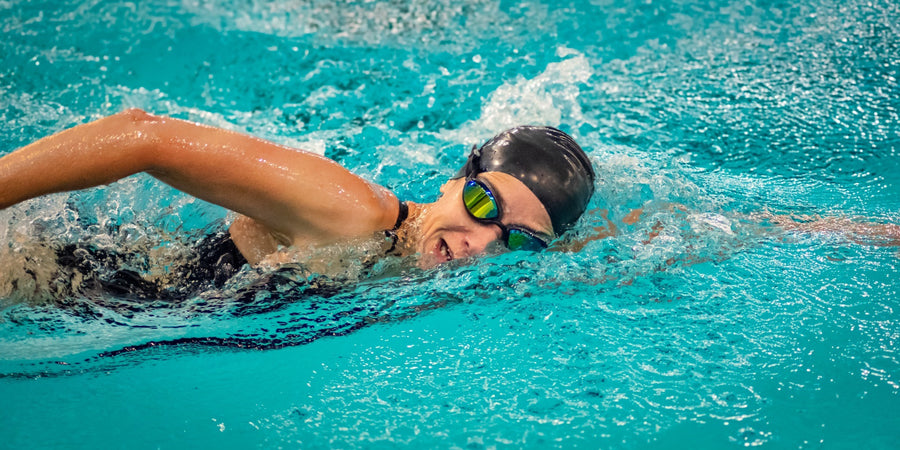
The black line on the bottom, the lane ropes and a wall every 25 or 50 metres give us constant chances to check our direction. None of those is there in the sea.
Our strokes are not perfectly symmetrical, either. One arm may pull slightly differently from the other. We might rotate farther towards our breathing side, or let a hand cross our centre line as it enters the water.
In the pool, we correct these small differences almost without thinking. In open water, they can gradually take us off course.
And swimmers are not alone in this. A study published in 2009 showed that people walking through forests and deserts without reliable visual reference points could end up going in circles without realising it.
Swimming 500 metres towards a buoy is not the same as reaching a buoy 500 metres away.
The sea has plans of its own
Sometimes your stroke is well balanced and you still drift away from your target. A current may be carrying you sideways.
There is an important distinction here: going off course does not always mean you are swimming in the wrong direction. You can be facing the right way while the water carries you towards a different point.
Wind-driven waves, glare and buoys disappearing between waves make navigation harder too.
In open water, you need to read the conditions as well as pay attention to your stroke.
The answer is smarter sighting
Checking your direction in open water is called sighting. You briefly lift your head to find your target, then return to your usual swimming position.
But lifting your head on every stroke is not the answer. As your head rises, your hips and legs can drop, adding drag and disrupting your rhythm.
That is why Swim England and U.S. Masters Swimming recommend brief, controlled looks and developing a sighting rhythm that works with your swimming.
A few small habits can make a difference:
- Before you start, pick a high, fixed landmark behind the buoy as well as the buoy itself.
- Lift just enough to bring your goggles above the surface, rather than raising your whole head.
- Adjust how often you sight to your technique, visibility and the conditions.
- If you keep veering to the same side, check your stroke and your body position when you breathe.
Above all, do not wait until you have lost your target completely before correcting your course.
The shortest distance between two points may be a straight line, but staying on that line in open water is a skill in its own right.
Sometimes swimming faster starts with swimming less extra distance, rather than taking faster strokes.