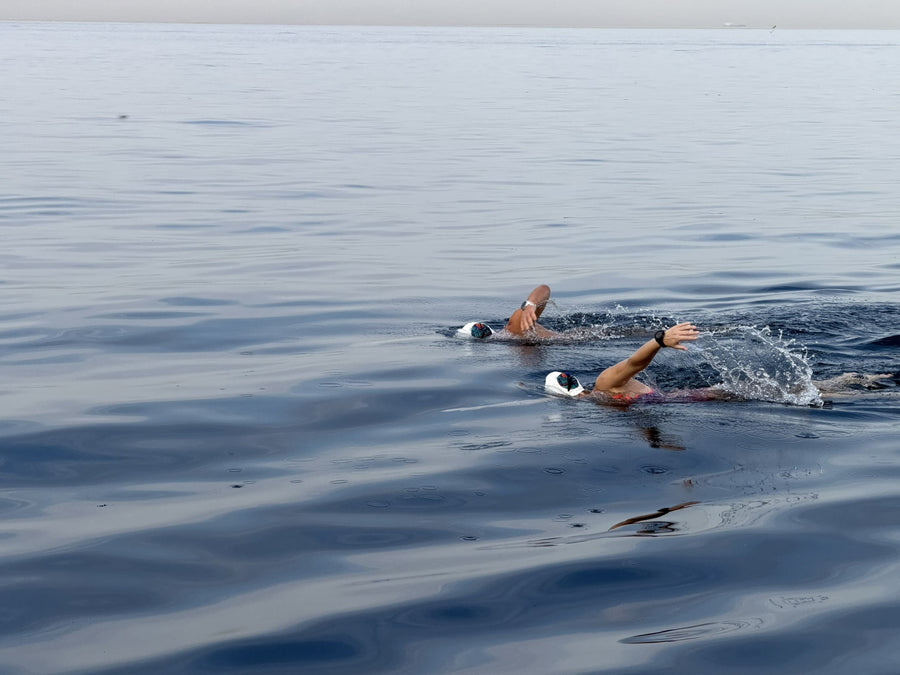
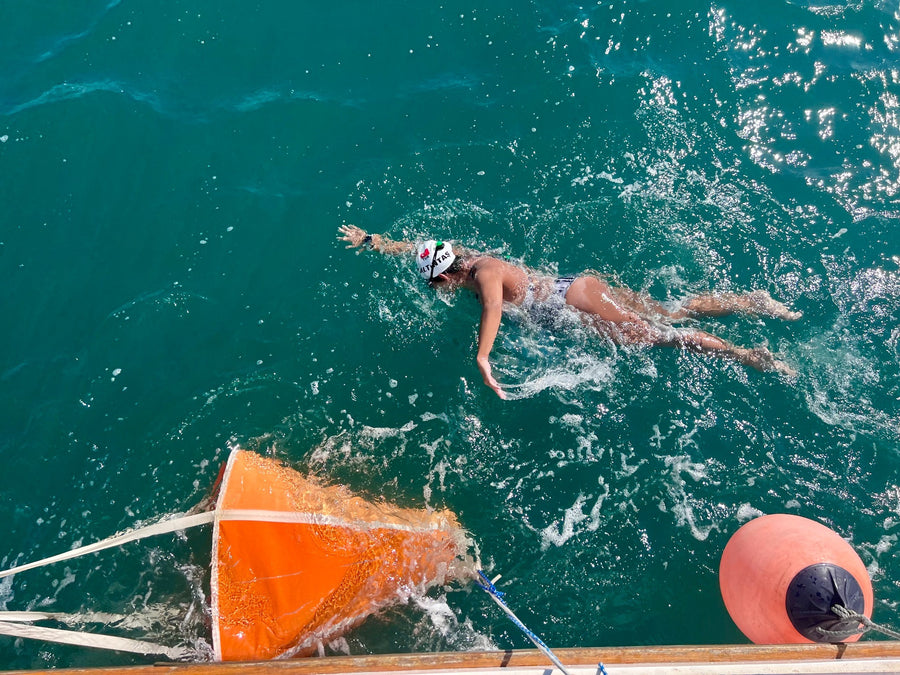
The swimmer in the next lane takes fewer strokes than you but moves just as fast. You pick up your turnover and take more strokes. Still, you can't close the gap.
The difference may lie not just in how quickly you move your arms, but in how much you get out of each stroke.
Speed has two components
Two important variables help determine swimming speed: stroke length and stroke rate.
Stroke length is the distance you travel with each complete stroke cycle. Stroke rate describes how many strokes you take in a given time. In technical measurements, it's usually expressed as complete stroke cycles per minute.
Put simply, speed is related to the product of these two variables.
But there's a balance to find. Increasing your stroke rate can reduce the distance you travel per stroke. Trying to stretch every stroke too far can disrupt your rhythm.
That balance also changes with the distance you're swimming. Higher stroke rates tend to feature in sprints, while longer swims call for a sustainable combination of stroke rate and stroke length that keeps the energy cost under control.
Research into swimming biomechanics shows that the relationship between stroke length and stroke rate is an important determinant of swimming speed.
More strokes don't necessarily mean more speed. Fewer strokes don't necessarily mean better efficiency.
How well are you working with the water?
Two swimmers can travel at the same speed while using different amounts of energy.
One might have a more effective pull, a better-balanced body position and fewer unnecessary movements. The other might need more energy to reach the same speed.
Drag matters, too. Body position, lifting the head too high or unnecessary movements during the stroke can all make it harder to move forwards.
So efficiency goes beyond taking fewer strokes. It's about reducing the energy needed to swim at a given speed.
How can we swim more efficiently?
Start with technique. Problems in stroke mechanics can be a major source of lost efficiency.
A stroke analysis using footage from above and below the water can reveal issues with the catch and pull, body position, rotation and unnecessary movements. Addressing them can help you get more from the same effort.
But focusing only on lowering your stroke count isn't the answer.
If you take fewer strokes but your time gets significantly slower, that isn't necessarily progress. Gliding for too long can also cost you speed.
Similarly, if increasing your stroke rate doesn't change your speed, you may simply be using more energy.
Tracking stroke count, time and perceived effort together at different paces can help you find a rhythm that works more efficiently for you.
Because the goal in swimming isn't to take as few strokes as possible.
It's to find your best speed at an effort you can sustain.